Global demand for military equipment is rising as countries respond to conflict, uncertainty, and shifting alliances.
SIPRI Arms Transfers Database (March 2026) shows which nations are driving the surge in defense spending and where demand is accelerating fastest:
Top 15 Arms Importers in 2025
- Saudi Arabia: 9.1%
- India: 8.6%
- Ukraine: 6.8%
- Poland: 6.5%
- Japan: 5.1%
- Germany: 4.9%
- Indonesia: 3.8%
- UAE: 2.6%
- Australia: 2.5%
- Netherlands: 2.5%
- Philippines: 2.5%
- USA: 2.2%
- Egypt: 2.1%
- Pakistan: 2.1 %
- Great Britain: 1.8%
Middle East and Asia Lead Demand
Saudi Arabia leads global arms imports by a wide margin, accounting for 9.1% of total demand, more than any other country. Its sustained spending highlights a broader trend. Nations are accelerating military upgrades in response to prolonged regional instability.
India follows closely at 8.6%, maintaining its position as a top importer due to ongoing regional tensions and the need to upgrade military capabilities. Meanwhile, countries like Qatar and the United Arab Emirates remain major buyers, reinforcing the Middle East’s strong presence in global arms demand.
Europe’s Rapid Expansion
Europe now accounts for 39.9% of global arms imports, the largest regional share by far. This sharp increase reflects a rapid buildup in defense capabilities following the war in Ukraine and a broader shift toward rearmament across the continent.
Ukraine ranks third globally with a 6.8% share, reflecting urgent military needs due to the war with Russia.
Broad Global Participation
While the top importers dominate headlines, arms demand is spread across dozens of countries, underscoring how widespread military investment has become in today’s geopolitical climate.
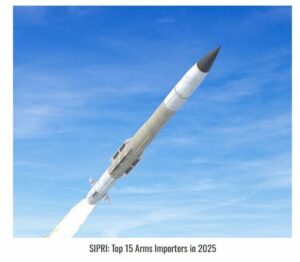
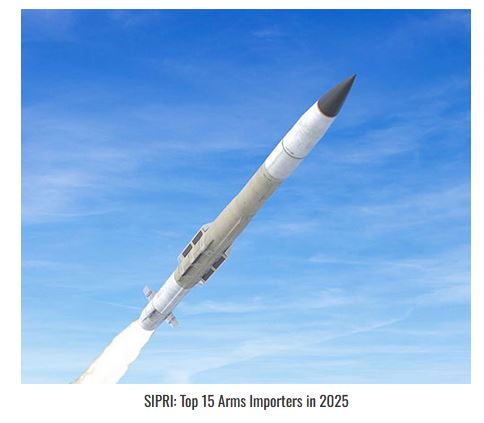
Nations like Japan, Germany, and Indonesia each hold significant shares. Smaller importers also represent a meaningful portion of the market. (SIPRI; VISUAL CAPITALIST; Photo: PATRIOT Advanced Capability-3 Missile Segment Enhancement (PAC-3 MSE) Missile © Lockheed Martin)